

Boru 2026: Dominican Japanese Documentary Lost in Its Own Story
The word “boru” means ball in Japanese, and the film’s poster is very Japan- and baseball-heavy, giving viewers the impression that we will be exploring the history and impact of Japanese baseball. When the documentary’s opening scene is a baseball game between two Japanese teams, we further establish that this film is about Japanese baseball and welcome the exciting inclusion of the Dominican Republic in their shared love of baseball. For that focus to shift completely and never return after the first 20 minutes of a 90-minute film does breed a level of incompleteness and even disappointment.
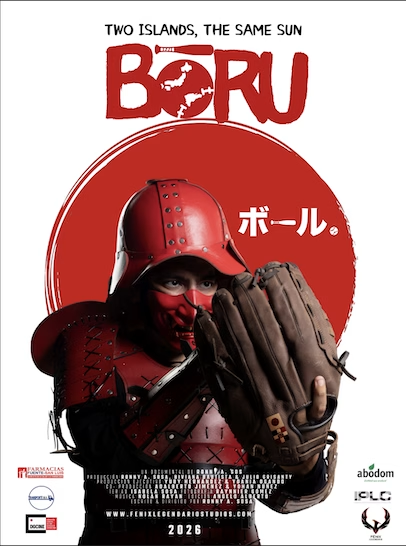
Boru is a documentary that explores the connections between the Dominican Republic and Japan through baseball, national agreements, and culture.

Boru 2026 Film Review
What Boru Promises vs. What It Delivers
Boru 2026 starts as what feels like a sports documentary, but then branches off into history about how the two nations first merged, culturally mixed community members, art, food, and everything in between — except for baseball.
The film attempts to right its wrongs by incorporating a visual of playground Dominican baseball at the end, but it’s too little too late.
Boru is not a linear film, which can make it hard to follow. It is two completely different films that could each individually stand on their own. Director Ronny Sosa himself said, “BORU began as a story about baseball—but quickly became something much bigger,” and I think that the shift of focus is evident in the finished project. We see the director’s mind wander beyond baseball but never seem to find our way back home.
What Works In Boru 2026
It is such a privilege to be able to explore the world and different cultures from the comfort of your own home through film. The director’s admiration of both Dominican and Japanese cultures is quite evident throughout, with several visually crisp scenes lingering on the beauty of the countries, the landscapes, the people, the food… It’s an immersive experience that tempts you to spontaneously book your next flight.
You can feel the electricity of the baseball game, smell the Dominican-inspired ramen through the screen, and hear the resounding Japanese drums. The use of sound and the unhurried camera work were so intentional and seamless.
To feel the pride of each community’s representatives, to resonate with straddling identity between two very different cultures, and to be reminded of the core thread that connects us all despite our differences truly uplifts the beauty of our shared humanity.
Boru was created over the course of 4 years, and reads as a love letter to the cultures that most move the director’s heart. With each intimate interview, it’s clear that connection is the core theme of this film and could have been a stronger topic to start with.
What Doesn’t Work in Boru 2026
Because there was no central narration to guide the transition within and between topics, the viewer is tasked with piecing together the puzzle themselves, creating links between various interviews and testimonies, spoken in Japanese and Spanish with English subtitles.
Because of the absence of narration, the occasional voiceover, especially at the end, feels a bit jarring and out of place, disrupting the pre-established tone. The poetic style is incorporated far too late in the film and would’ve been more impactful if introduced much earlier.
The documentary attempted a level of structure by inserting title shots between chunks of interviews; however, they did little to aid in the film’s organization. Interviews about the cultural fusion of food were dispersed throughout the film, although there was a chapter-like format that could have merged them for smoother flow. The food segments crowded out room that could’ve gone to a stronger baseball throughline.
Beyond structure, Boru’s pacing lacks impact. It feels stagnant, not building tension but rather providing a steady hum of information rather than momentum. The lack of movement makes it hard to stay invested, since the story itself is hard to grasp.
In Conclusion…
Boru shines light on the beauty of the DR and Japan and the cultural bridges that connect them. What begins as a baseball connection branches out into varied exploration of how the two cultures converge and differ in other ways. Viewers can take this as a wide net to ignite a deeper personal investigation, or they can take it as an unfocused trip that leaves them with many questions rather than answers.
Because the film loses its sports focus, I would recommend Boru for people interested in the cultural history and relationship between two cultures rather than those hoping for a sports doc.
In its parts, Boru contains rich insight with a quiet current of intrigue. I came away more educated about these cultures and the beauty in that overlap. But the story itself is fragmented, making it hard to stay emotionally invested in the whole.
That gap between the parts and the whole is exactly why a film this rich still lands at just above average: the sum of Boru’s parts is, in fact, greater than the whole.
Rating: 5.5/10
Boru is set to release in autumn 2026.
What are your thoughts on the Dominican Japanese (and baseball) fusion that is Boru 2026? Let me know in the comments below!
And be sure to subscribe for the latest blog updates (form in sidebar).
Peace, love, and lots of popcorn,
IMO
Last Updated on 08/17/2026 by IMO Flicks
Author


You May Also Like

300 Essential Movies I Must Watch

By Sophia Lee Blogging Course Review 2026 | Perfecting Blogging Is The GOAT
